I would like to change my research topic. My previous research question was:How can support young adults aged 18–26 in understanding the desires behind their decisions and choose their lifestyle when navigating uncertainty?The key themes of this project were inner self-exploration, desire, decision-making, lifestyle and the future.
During the research process, I realised that this question was too broad and not specific enough. I also did not have a deep personal connection with the topic, which made it difficult for me to continue developing and moving the research forward.
My new research question is:How can Chinese adults with ADHD be supported in navigating challenges associated with ADHD and developing lifestyles that suit them?This new question has a more specific research group: Chinese adults with ADHD. The project will still focus on inner self-exploration, lifestyle and the future, but this topic is more personally relevant to me.
What is ADHD?
(Attention Deficit Hyperactivity Disorder)
ADHD is a disorder that is identified through patterns of behaviour. People with ADHD may show ongoing patterns of inattention and/or hyperactivity and impulsivity. These patterns can affect their everyday functioning and development.(ADHD UK, n.d.)
What causes ADHD?
There is no single cause of ADHD. Research suggests that ADHD may be connected to differences in brain development, especially in the prefrontal areas that are related to executive functioning. Differences in dopamine and norepinephrine signalling are also considered important possible factors.(American Psychiatric Association, 2022)
The Situation of Adult ADHD in China
In China, there is still a large gap between research and treatment related to ADHD and the situation in many Western countries, especially regarding adult ADHD. China only introduced its first standardised clinical guidance specifically for adult ADHD in 2023, while the UK had already introduced relevant guidance in 2008.(Chinese Society of Psychiatry and Chinese Psychiatrist Association, 2023)
This means that there are still many gaps in the research and treatment of adult ADHD in China. Both medical professionals and the general public may have limited knowledge and understanding of adult ADHD. People with ADHD, as well as people who may have ADHD but have not been diagnosed, may not receive effective support or treatment and often experience misunderstanding.
Research Gap: Difficulties in Diagnosis
Firstly, it can be very difficult for adults in China to receive an ADHD diagnosis. Many hospitals do not have separate services for adult ADHD. Adults may even be required to visit paediatric departments. In addition, some doctors may not have enough professional knowledge about adult ADHD.
Some people still believe that ADHD only affects children or that people cannot have ADHD if they are able to live without intervention. ADHD may also be treated as an excuse for avoiding responsibilities rather than being understood as a real condition. Adults may spend a long time trying to receive a diagnosis.
In China, public understanding of ADHD is still limited, and many common ideas are inaccurate or negative. Some ADHD-related behaviours are often understood as laziness, poor self-control, weakness or an inability to concentrate. Many people with ADHD have received these kinds of comments throughout their lives.
However, ADHD is a disorder rather than a personality trait. Many people who may have ADHD spend years believing that these difficulties are only personal problems. They may feel shame and guilt and therefore delay seeking professional support or treatment.
Several adult participants described having long-term difficulties with attention, completing plans, emotional regulation and ongoing procrastination since childhood. Their family members, friends and teachers often described these behaviours as “laziness”, “a lack of self-discipline” or “weak willpower”.After entering university and the workplace, external structures and support became less available. The negative effects of executive functioning difficulties became more visible. They often struggled to complete work tasks, maintain long-term plans and organise their daily lives. Many also experienced long-term insomnia and ongoing anxiety.When they went to hospitals to seek a diagnosis, they faced several barriers. There were limited specialist services for adult ADHD in China. Some psychiatrists continued to believe that ADHD only affects children and disappears in adulthood. Some doctors also rejected the possibility of ADHD because the person had entered university or completed their education. Many people had to visit several hospitals and spend years searching for a diagnosis before finally receiving one.(Guangming Daily, 2026)
The Popularity of ADHD on Social Media
It is also important to notice that discussions about ADHD have become very popular on social media in recent years. However, ADHD is sometimes treated like a fashionable identity or a popular label. Some people like to describe themselves as having ADHD without understanding the condition.
On Chinese social media, people with ADHD are sometimes described as being creative and imaginative. These characteristics are seen as unusual, interesting or “cool”. At the same time, some people use ADHD as an excuse for procrastination or avoiding responsibilities. For example, they may say, “I do not want to go to work today because my ADHD is acting up.”
There are also many posts that say things such as, “If you have these symptoms, you have ADHD.” However, the more accurate understanding is that ADHD symptoms may appear in certain ways, but having some similar experiences does not automatically mean that someone has ADHD.
On Chinese social media, ADHD has gradually become an identity label that can sometimes be treated like a fashionable product. Online content often highlights positive characteristics while avoiding the serious difficulties that ADHD may cause in everyday life, such as problems with eating independently or maintaining a regular routine.Many people are interested in simple online self-tests but ignore the fact that ADHD requires professional assessment. The experiences and difficulties of people with ADHD may become simplified or treated as entertainment.These misunderstandings can also influence offline life. People may develop limited ideas about ADHD through short videos and continue to judge people with ADHD as “lazy” or lacking self-control. Online discussions can become divided: some people strongly identify with the ADHD label, while others believe that every ADHD-related explanation is only an excuse. This may further strengthen social stereotypes.People who genuinely need diagnosis and treatment may struggle to find appropriate support, while people without clinical symptoms may easily follow online trends and identify with the label. This situation may also make diagnosis more difficult. Some doctors may become more doubtful about adult patients’ experiences, which can create further barriers to receiving support.
However, we should not completely deny the positive value of social media. Online discussions have brought adult ADHD, which was previously less visible, into public attention. They have also helped many people who have experienced difficulties for years realise that their experiences may have a medical explanation.
However, the current media environment still lacks enough professional guidance. Unbalanced, incomplete and inaccurate information can become more visible than professional information. These narratives may ignore the real difficulties experienced by people with ADHD. Therefore, the negative effects may currently be greater than the positive effects.
Limited Treatment and Everyday Support
People with ADHD not only have to deal with public misunderstanding and inaccurate information on social media, but they also have limited access to practical support. In many cases, the main treatment available in hospitals is medication. However, everyday self-management and adjustments are also very important.
However, these everyday adjustments can be difficult for people with ADHD. In China, there are still very few professional guides about how adults with ADHD can manage their daily lives. Reliable and useful information is limited. There are also very few authoritative public education resources or well-developed communities.
I have seen many people with ADHD on different social media platforms expressing a need for a place where they can access reliable information, discuss their experiences and support each other.
Eventually, I found several small posts on social media such as RedNote. People with ADHD were supporting each other and sharing practical ways of managing ADHD-related difficulties. For example, they discussed how to eat and shower regularly, how to stay focused while studying or working, and how to encourage each other.
These problems may appear basic, and the online communities are small, but the shared experiences can be very useful because they are based on real situations and are suitable for the people involved. The atmosphere in these spaces can also feel warm and supportive.
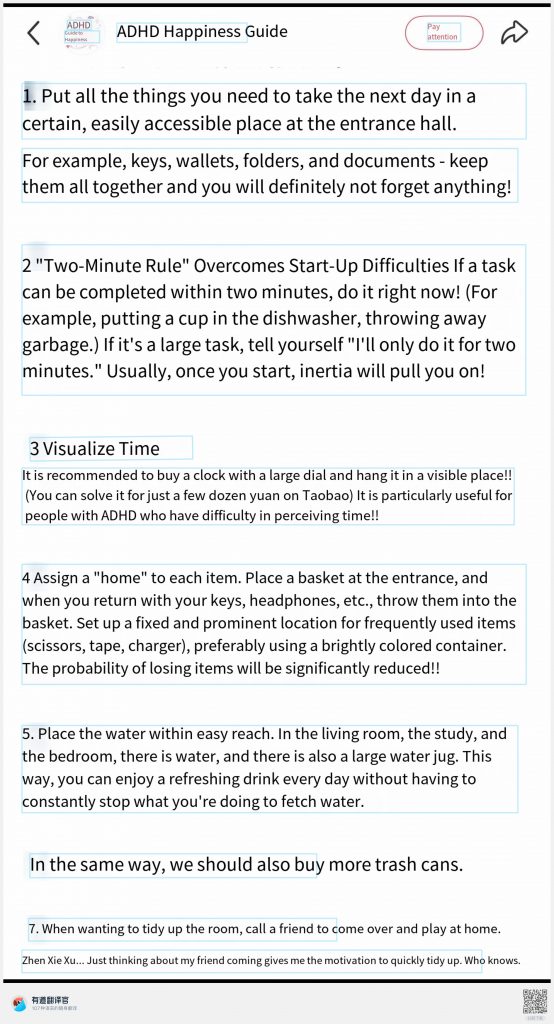
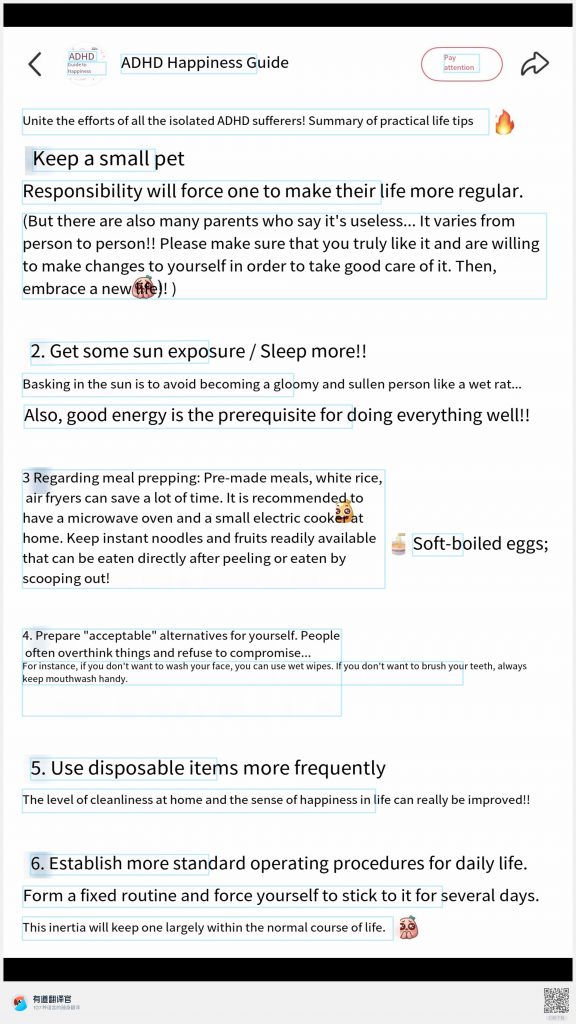
However, there are also problems. Some people who give advice may not have ADHD themselves. They may offer suggestions that are not useful or assume that a simple solution will work for everyone. This can create further confusion or pressure.
Why an ADHD Community May Be Important
There may be many people in China who have ADHD-related experiences but have not been diagnosed. There are also many inaccurate ideas, stereotypes and misunderstandings. However, the number of people who have received a diagnosis and started treatment is still limited.
People with ADHD may experience similar symptoms and face similar difficulties. They may also find it easier to understand each other. Within a focused community, they could share experiences, support and encourage each other, and discuss practical ways of managing everyday life.
This may make it easier to identify useful information and create a stronger sense of belonging. It may also support people in exploring lifestyles that are more suitable for them.
Personal Motivation
As a person with ADHD, I have a clear and personal understanding of the internal and external difficulties experienced by this group. I also experience both ADHD and anxiety. For me, the most difficult part is not continuing an action, but starting it.
Even when I really want to start, I always have many ideas in my mind and many things that I want to do. I want to face these difficulties with a positive attitude. However, sometimes my body feels as if it is locked. I cannot take action or begin, even when the task is very simple.
For example, I may find it difficult to follow a simple instruction such as taking a shower. Sometimes I cannot even complete activities that I am interested in, such as playing games. This makes it even more difficult to begin tasks that are important or stressful to me, such as attending classes, completing assignments or carrying out research.
I know that once I begin, many things are not as difficult as I imagined. However, I still find it very difficult to take the first step.
Over time, this internal conflict has placed me in an ongoing negative cycle. My thoughts and my body sometimes feel separate. I want to take action, but I cannot make myself do it. I feel that I cannot control my own body. This is very painful and has caused me to develop negative feelings towards myself. These feelings become even stronger when my difficulties affect other people.
Because I understand how seriously ADHD can affect people’s lives, I do not want more people to experience similar difficulties without receiving effective support. I also do not want people with ADHD to feel alone.
This project is therefore very important to me. ADHD is something that may continue throughout my life. Whether I am studying or working in the future, ADHD may bring both creativity and imagination, as well as difficulties. I hope that I can learn to create a better balance between these different experiences.
My Intervention
As I mentioned before, I plan to create a community for people with ADHD. In this community, people could support and encourage each other. It could also provide information for people who may have ADHD but have not yet received a diagnosis.
At the moment, I have mainly carried out one-to-one interventions. For example, I have had individual conversations with my stakeholders, who also have ADHD. We shared our experiences and suggested practical methods to each other.
For example, one person told me that she found it difficult to leave home on time. Based on my own experience, I suggested placing her alarm near the front door. This would require her to walk towards the door to turn it off and could make it easier for her to leave home. This intervention was useful for her.
Another example was related to my blog. I have to complete it, but I could not control my attention or begin working. Another person with ADHD suggested that I take my iPad to a public place. I then completed my whole blog in a café.
When I look back, although my blog may still have many problems, this intervention was successful for me. At least I was able to take action. It also gave me a sense of self-worth and helped me build the confidence and motivation to continue with my next stage of research.
Research suggests that ADHD peer-support interventions can provide unique emotional support, practical experiences that are relevant to participants, and support for behavioural change. They may be a valuable form of support alongside medication and clinical psychological treatment.(Frontiers, 2025)
Sharing experiences within a group of people with similar experiences may help individuals understand that their difficulties are not only personal problems. It may reduce feelings of loneliness and internalised shame and help to reduce anxiety and depression related to long-term self-blame. This may create a more positive psychological cycle.(Frontiers, 2025)
Next Intervention
Unlike the content on RedNote, this community would not be designed for everyone. It would focus specifically on people with ADHD. It would also be more than one-to-one conversations.
I hope to develop a focused ADHD community where people can share their experiences and outcomes.
For example, they could discuss questions such as:
Does this method work for most people?
Why does it work or not work?
Are there any better ways to manage this difficulty?
References:
ADHD UK. (n.d.) About ADHD. Available at: https://adhduk.co.uk/about-adhd/ (Accessed: 31 July 2026).
American Psychiatric Association. (2022). Diagnostic and statistical manual of mental disorders (5th ed., text rev.). American Psychiatric Association. Available at: https://doi.org/10.1176/appi.books.9780890425787
Chinese Society of Psychiatry and Chinese Psychiatrist Association (2023) ‘Expert consensus on the diagnosis and treatment of adult attention deficit hyperactivity disorder in China (2023 Edition)’, Zhonghua Yi Xue Za Zhi, 103(28), pp. 2133–2144. doi: 10.3760/cma.j.cn112137-20230322-00457.
光明网 (2026) 被忽视的成人多动症. Available at: http://health.gmw.cn/2026-01/21/content_38563916.htm
Li, Y. (2025) Understanding ADHD in the Age of Social Media: A Qualitative Study on User-Generated Narratives and Public Perceptions in China. International Media Journal. Available at: https://soapubs.com/index.php/IMJ/article/download/807/788/2489.
Frontiers (2025) Scrolling for support: informational, emotional, and social support in adult ADHD Facebook groups. Frontiers in Psychiatry. Available at: https://public-pages-files-2025.frontiersin.org/journals/psychiatry/articles/10.3389/fpsyt.2025.1755437/pdf.
Leave a Reply